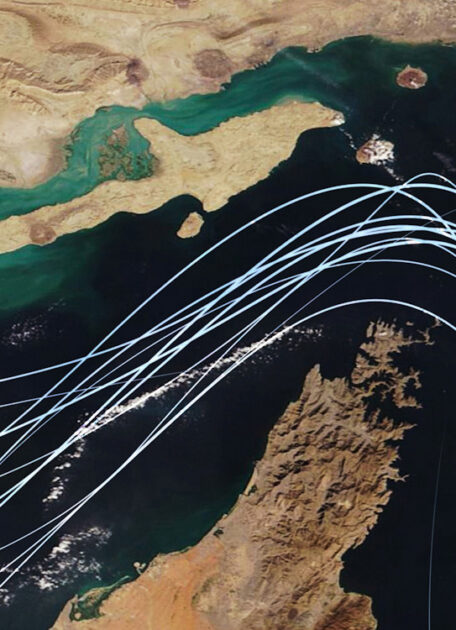
For food and agriculture companies, fashion and luxury brands, and retailers, disruption around the Strait of Hormuz is rapidly becoming a margin, availability, and cash issue. By 30 March, shipping transits through Hormuz were down by more than 95%1, with the IEA describing the situation as the largest supply disruption in the history of the global oil market.
The implications extend well beyond energy. Higher fuel and power costs are feeding into freight, fertilizer-linked inputs, and petrochemical derivatives such as plastics, films, and packaging resins. At the same time, rising insurance costs and weaker transport reliability are increasing the cost and complexity of moving goods.
In consumer, where replenishment is frequent, demand is time-sensitive, and exposure to affected inputs and logistics is direct, the impact can be significant. With pricing power often constrained, higher cost pressure is harder to absorb. While the pattern differs across sectors the underlying implication is the same: if left unmanaged, these effects can compound rapidly.
Disruption Exposure and Impact for Diverse Consumer Sectors
Within the consumer sector, the disruption is translating into business pressure across four dimensions: energy and utilities, materials and inputs, trade routes and logistics, and risk premiums and financial friction.
1. Food & Agriculture

- Energy & utilities: Higher oil, gas, and power prices raise the cost of farming, irrigation, industrial processing, refrigeration, warehousing, and distribution. The pressure is felt first in cold-chain-heavy models such as dairy, meat, frozen foods, and fresh produce
- Materials & inputs: Tighter input markets increase pressure on fertilizers, grains, edible oils, sugar, and packaging materials, creating simultaneous volatility in core ingredients and packaging costs
- Trade routes & logistics: Lower transport reliability creates immediate risk for perishable and service-sensitive categories. Delays can reduce shelf life, weaken service levels, and increase waste
- Risk premiums & financial friction: Longer lead times and greater volatility increase buffer requirements, absorb more working capital, and add costs through insurance and supplier claims
- Highest exposure where perishability, cold chain, and input volatility intersect
Focus on securing supply continuity for perishable and input-volatile categories, including alternative sourcing for key ingredients and packaging, and proactive management of shelf-life risk
2. Fahion & Luxury

- Energy & utilities: Higher power prices increase the cost of textile processing, dyeing, finishing, and garment manufacturing, particularly in energy-intensive production stages
- Materials & inputs: Where inputs rely on energy- or chemical-intensive production, cost increases can feed through more quickly. That is particularly relevant for synthetic fabrics, trims, packaging, and specialty materials
- Trade routes & logistics: Weaker transport reliability delays fabric arrivals and finished goods, putting collection calendars and launch timing under pressure. The impact is often felt through shorter selling windows and reduced in-season flexibility
- Risk premiums & financial friction: Earlier inventory commitments, more stock in transit, and lower room to react increase execution risk across the season
- Highest exposure where material specificity, long lead times, and seasonal timing are critical
Protect collection-critical materials and timelines by increasing flexibility in sourcing and production commitments, and actively managing the trade-off between availability, lead times, and assortment complexity
3. Retail

- Energy & utilities: Higher fuel and power costs increase the cost of operating stores, distribution centres, and transport fleets. The effect is particularly visible in grocery and omnichannel models with temperature-controlled networks
- Materials & inputs: Input pressure is most evident in private-label sourcing, shelf-ready packaging, and import-heavy categories where upstream inflation moves quickly into landed cost
- Trade routes & logistics: Lower transport reliability makes replenishment less predictable, increases inventory in transit, and raises the risk of stock gaps across stores and online channels
- Risk premiums & financial friction: Higher landed costs, tighter supplier conditions, and more cash tied up across the chain increase pressure on already constrained pricing and margin decisions.
- Highest exposure where import reliance is high and pricing flexibility is limited.
Prioritize availability of high-rotation and margin-critical SKUs, strengthen flexibility in private-label sourcing, and dynamically rebalance inventory across channels and locations
What Consumer Procurement Leaders should Do Now
While the immediate priority is to contain the exposure embedded in current and future contracts, the longer-term objective should be to reassess strategy and structural dependencies, reducing future vulnerabilities while building greater flexibility into the business.
Step 1: Managing exposure already in motion
- Benchmark bids against current movements in commodities, freight, energy, and insurance
- Use pricing mechanisms that can absorb further volatility, including indexation, clear adjustment triggers, and shorter validity periods where appropriate
- Secure explicit commitments on volumes, priority allocation, and lead times
- Challenge baseline demand, prioritize critical SKUs and business-essential volumes, and reduce unnecessary complexity before going to market
- Qualify alternative materials, sources, or formulations early where exposure is concentrated
- Revisit pricing logic and test whether fixed-price structures remain fit for purpose
- Introduce review windows or reset clauses where conditions may shift further
- Reconfirm supplier commitments on capacity, continuity, and operational readiness before go-live
- Reassess lower-priority requirements that add cost or complexity without strengthening the business
- Revalidate specifications against current supply risk and reduce unnecessary customization where lower-volatility alternatives are available
- Manage claims through a structured process rather than through ad hoc concessions, challenging unsupported requests
- Reconfirm service levels, lead times, and supply commitments
- Enforce contractual protections on continuity and extraordinary cost treatment where these exist
- Strengthen supplier dialogue to align on continuity plans, escalation paths, and joint actions to protect critical volumes and service levels
- Rebalance demand internally by protecting core SKUs, strategic customer demand, and service-critical volumes first
- Accelerate the use of approved substitutes, secondary specifications, and additional sources where dependency on exposed suppliers or lanes remains high
Step 2: Reduce structural exposure
Structural exposure often reflects choices that were rational in more stable conditions: concentrated sourcing, narrow specifications, limited supplier redundancy, or an operating model optimized for cost rather than flexibility.
Periods of disruption bring those assumptions into sharper focus. This is where procurement can play a central role in helping the business define where to diversify, simplify, or redesign. The objective is not to make every category equally resilient, but to reduce exposure where it matters most and strengthen the business’s capacity to adapt.
- Reassess sourcing concentration, identifying dependence on specific countries, routes, suppliers, and input bases
- Reduce dependency on high-risk inputs by evaluating substitutes, reformulations, or alternative materials
- Revisit specifications and design choices where complexity, customization, or narrow material requirements are limiting supply flexibility
- Strengthen supplier portfolio resilience by expanding the mix of approved suppliers
- Build earlier visibility into risk through stronger exposure mapping, supplier monitoring, and scenario planning
From Immediate Response to Structural Advantage
Disruption around the Strait of Hormuz is not only testing supply chains. It is testing how quickly consumer companies can turn external volatility into clear, coordinated action. For procurement, that means doing more than containing short-term disruption. It means helping the business protect what matters most today while strengthening the decisions that will shape resilience tomorrow.
The real differentiator will not be broad-based intervention, but precision: knowing where exposure is concentrated, where flexibility matters most, and where change will create lasting value. In consumer, where cost, availability, and brand trust are tightly connected, that capability goes beyond risk management. It becomes a source of resilience, control, and competitive advantage.
Sources
[1] UN Trade and Development, From gas to grain: Fertilizer disruptions raise risks for food security and trade (30 March 2026).
Authors

Marcus Schwarz
Managing Director
Copenhagen

Katharina Erfort
Principal
London

Cristina Velasco Tamames
Senior Consultant
London
Further Risk Management Insights