
Decarbonization
Reduce Your Carbon Footprint
As businesses face increasing pressure to reduce carbon footprints, procurement plays a crucial role in driving decarbonization efforts across the supply chain. Strategic decarbonization in procurement can accelerate your organization’s journey toward net-zero emissions.
How We Create Sustainable Impact

Significant Impact of Procurement
Procurement significantly impacts an organization’s carbon footprint, with up to 80% of emissions originating from the supply chain.

Carbon Footprint Analysis and Supplier Collaboration
Inverto is a key partner in achieving sustainable procurement goals by developing sustainable procurement strategies, analyzing carbon footprint, and collaborating with suppliers to minimize indirect emissions.

Beyond Compliance: Driving Procurement Value through Sustainability
The call for sustainable procurement is growing stronger – to protect the planet, and to secure resilience and efficiency. With our white paper Beyond Compliance, we want to highlight this shift and support companies with practical approaches.
PROCUREMENT: LET’S GET REAL!
Our Expert Kiren on Decarbonization
Our main proposition approaches the challenge from 5 key areas:
- SOA: Firstly we start with the assessment phase – our Sustainability Opportunity Assessment or SOA. This is the key starting point to help build a baseline, understand your ESG procurement maturity and define key abatement levers to know where to focus. We often do this alongside a typical cost assessment to find cost savings to fund the carbon journey – helping mitigate the challenge of investment. Then we move into design and implementation where we look at 3 main levers: (i) reducing emissions from suppliers, (ii) reducing emissions from the supply chain, and (iii) reducing emissions from products
- Suppliers: When we talk about suppliers, we look at how to actively influence suppliers through incentives and disincentives, plus how to adapt sourcing processes to select new suppliers with lower emissions. We also recommend looking more across the value chain and at the broader ecosystem – for example, how can you work with your supplier’s suppliers more? Or form alliances with competitors to drive industry change?
- Supply Chain: Regarding the supply chain, we start off by looking at where you should source from in the world based on emissions – so rather than re-shoring or nearshoring, we look at green-shoring. For a manufacturing client, we looked at the impact of the new CBAM regulations to advise whether they should source more steel from China or Europe. We also look at our clients’ logistics footprint to see how to reduce it, e.g. Switching from air freight to sea freight, or moving from diesel vans to EVs
- Product Design: The final lever is around product design, which includes how to build sustainability into your design processes, how to conduct value engineering to redesign products and product lifecycle management
- Op Model: The final fifth area we support is the Operating Model: The priority areas for clients are getting data, upskilling their teams and refining procurement processes to factor sustainability more into decision making
Using these 5 elements, we support clients on their end-to-end decarbonization journey to help them reach their carbon goals.
At the beginning of the decarbonization journey there is a need to create transparency across the different types of emissions:
- Scope 1: direct emissions from the company’s own production
- Scope 2: indirect emissions related to the purchasing of electricity and air conditioning for the company’s buildings
- Scope 3: all other emissions that arise in the company’s value chain, caused by suppliers, services or logistics
While the amount of Scope 1 and Scope 2 emissions is relatively easy to determine and within a company’s direct sphere of influence, Scope 3 emissions, which can be as much as 70-90% of a company’s total emissions, lack transparency and direct access. With its direct contact to suppliers and service providers, procurement plays a crucial role in mitigating Scope 3 emissions.
Scope 1
Emissions from operations under facility's control, including onsite fuel combustion
Scope 2
Emissions from usage of electricity, steam, heat and/or cooling purchased from third parties
Scope 3
Emissions from produced products, transport of supplies, business travel
Emissions from transport of products, usage of sold products, product disposal
How We Support Your Procurement in the Decarbonization Journey
- Build a baseline
- Understand your ESG procurement maturity
- Define key abatement levers to understand where to focus.
- Set decarbonization roadmap
We often do this alongside a typical cost assessment to find cost savings to fund the carbon journey – helping mitigate the challenge of investment
- Data & Tools to actively measure emissions and progress
- Upskilling procurement teams
- Refining procurement processes to factor decarbonization into decision making
Reducing emissions from suppliers
- Actively influence suppliers through incentives and disincentives
- Adapt sourcing processes to select new suppliers that have lower emissions
- Look across the value chain and at the broader ecosystem, e.g. closer collaboration with suppliers, industry alliances
Reducing emissions from the supply chain
- Define sourcing regions based on emissions, e.g. Nearshoring, Greenshoring
- Ensure compliance with regulations, e.g. CSDDD, CBAM,…
- Optimize logistics footprint, e.g. switching from air freight to sea freight, or moving from diesel vans to EVs
Reducing emissions from products
- Value engineering to redesign products with a lower carbon footprint
- Product lifecycle management, e.g. recycling, waste management
Our main proposition approaches the challenge from 5 key areas:
- SOA: Firstly we start with the assessment phase – our Sustainability Opportunity Assessment or SOA. This is the key starting point to help build a baseline, understand your ESG procurement maturity and define key abatement levers to know where to focus. We often do this alongside a typical cost assessment to find cost savings to fund the carbon journey – helping mitigate the challenge of investment. Then we move into design and implementation where we look at 3 main levers: (i) reducing emissions from suppliers, (ii) reducing emissions from the supply chain, and (iii) reducing emissions from products
- Suppliers: When we talk about suppliers, we look at how to actively influence suppliers through incentives and disincentives, plus how to adapt sourcing processes to select new suppliers with lower emissions. We also recommend looking more across the value chain and at the broader ecosystem – for example, how can you work with your supplier’s suppliers more? Or form alliances with competitors to drive industry change?
- Supply Chain: Regarding the supply chain, we start off by looking at where you should source from in the world based on emissions – so rather than re-shoring or nearshoring, we look at green-shoring. For a manufacturing client, we looked at the impact of the new CBAM regulations to advise whether they should source more steel from China or Europe. We also look at our clients’ logistics footprint to see how to reduce it, e.g. Switching from air freight to sea freight, or moving from diesel vans to EVs
- Product Design: The final lever is around product design, which includes how to build sustainability into your design processes, how to conduct value engineering to redesign products and product lifecycle management
- Op Model: The final fifth area we support is the Operating Model: The priority areas for clients are getting data, upskilling their teams and refining procurement processes to factor sustainability more into decision making
Using these 5 elements, we support clients on their end-to-end decarbonization journey to help them reach their carbon goals.
Get to Know our Sustainable Procurement Experts
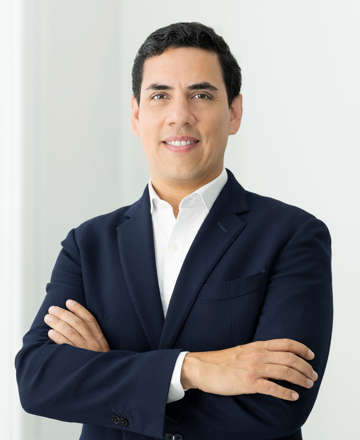
Manuel Berlanga Diaz
Managing Director
Madrid

Kiren Pandya
Principal
London
See what's possible.
Get in Touch.
See what's possible.
Get in Touch.
See what's possible.
Get in Touch.
See what's possible.
Get in Touch.
See what's possible.
Get in Touch.
See what's possible.
Get in Touch.
Our Sustainable Procurement Insights