When procurement is integrated into the design of CAPEX, its impact extends beyond the initial investment.

Rising CAPEX intensity, technical complexity, constrained supplier markets, fleet electrification, and increasing cost pressure are redefining how port infrastructure investments must be managed. Procurement has become a decisive lever to control cost, risk, and long-term asset performance.
- Late integration of procurement and restrictive specifications drive unnecessary CAPEX and limit competition
- The largest value lies in total cost of ownership, not in upfront price negotiation
- Procurement-led approaches unlock 6–13% savings across core equipment categories while improving supply market approach and long-term transparency
- Leading operators embed procurement into CAPEX decisions to increase delivery reliability, while leveraging bundling and technical standardization to reduce complexity and scale efficiencies across terminals
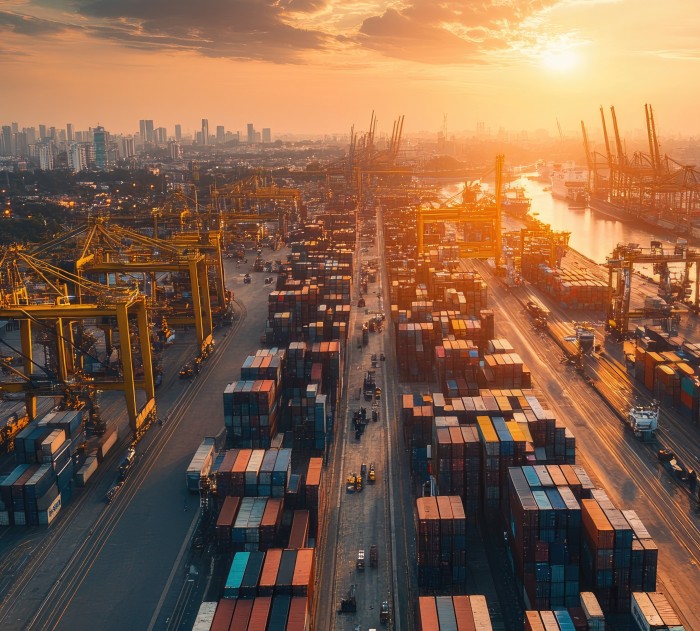
Ports have always been capital-intensive. What has changed is the environment in which these investments are made. Today, ports are operating under a new level of structural complexity. Across Europe, infrastructure systems are entering a prolonged investment cycle. BCG estimates more than €12 trillion will be required through 2040 – while cost pressure and supply constraints continue to intensify.
Automation, electrification, and capacity expansion are increasing the scale and complexity of CAPEX programs. The shift toward electrified fleets and automated equipment is further accelerating investment requirements while increasing pressure on operational cost structures.
At the same time, supplier markets remain tight, technologies evolve quickly, and global trade patterns continue to shift. Investment decisions today determine not just cost, but long-term flexibility and resilience within a highly interconnected logistics system.
Recent BCG research highlights significant differences in operational and digital maturity across global ports – illustrating how strongly performance depends on how effectively assets, operations, and decision-making are integrated.
In this environment, traditional approaches to procurement reach their limits.
A different Way to deliver CAPEX
Port infrastructure projects rarely underperform because of a single decision. The issue lies in how decisions are sequenced. New technologies and AI-driven operational models are reshaping how assets are maintained, operated, and optimized over their lifecycle – making early design and procurement decisions even more critical. n more critical.
In many organizations, CAPEX follows a linear logic: engineering defines specifications, suppliers are approached within those constraints, and procurement is brought in once key parameters are already fixed. By that point, the most powerful levers – competition, design choices, and cost structure – are no longer accessible.
A more effective model breaks this sequence
Instead of treating procurement as an execution function, leading operators integrate it into the design of CAPEX itself. Engineering, operations, and procurement work in parallel, aligning technical requirements with market realities and long-term cost implications from the outset.
This shift changes how value is created:
-

Specifications are actively challenged to remove unnecessary complexity and enable broader supplier participation, while remaining sufficiently aligned with market standards to avoid unnecessary customization
-

Supplier markets are shaped, not just accessed -expanding competition beyond incumbent players, including the assessment of Best-Cost-Country sourcing options where strategically viable
-

Decisions are based on total cost of ownership, including maintenance, lifecycle performance, and operating implications
CAPEX is no longer engineered first and sourced later. It is developed as an integrated system, where technical design and commercial strategy are inseparable.
Where Impact becomes Visible
When procurement is integrated into the design of CAPEX, its impact extends beyond the initial investment.
Port infrastructure is shaped by a small number of high-value asset categories – such as cranes, vehicles, and handling equipment – supported by a broad base of operational spend, including maintenance, IT, and construction services. Decisions taken during CAPEX therefore define not only upfront investment, but the long-term cost and performance of operations.
This is where the shift in approach becomes tangible.
At the asset level, challenging specifications, structuring demand, and expanding supplier access fundamentally change how investments are priced and delivered. Their effects extend directly into OPEX: simplifying maintenance, standardizing components, and enabling more efficient sourcing of operational services. Increasingly, digital and AI-enabled maintenance models also create new opportunities to optimize lifecycle cost and equipment utilization.
What emerges is a lifecycle perspective in which CAPEX and OPEX are no longer managed separately, but as part of the same cost structure – allowing organizations to reduce total spend while improving operational stability.
1
Container Bridge
- Re-Specification
- Cost engineering
- RfX & negotiations
~10% savings
2
Van Carrier
- Standardization
- RfX & negotiations
~6% savings
3
Terminal Tractor
- Re-Specification
- Strategic partnership
- RfX & negotiations
8–12% savings
4
AGV
- Strategic partnership
- RfX & negotiations
~10% savings
5
Forklift
- Bundling
- Re-Specification
- RfX & negotiations
~13% savings
Scaling Impact across the Organization
While individual categories demonstrate what is possible, the full impact emerges when this approach is applied systematically.
In one major port operator, procurement was repositioned as a central function across CAPEX and OPEX. Category strategies were introduced, procurement was integrated earlier into investment decisions, and cross-functional collaboration was strengthened. At the same time, collaboration across terminals was intensified, reducing organizational silos and enabling a more coordinated approach to supplier and category management.
This resulted in more than €15m in savings across capital and operational spend, alongside a more structured and scalable procurement operating model.
Beyond the immediate financial impact, the foundation for continuous value creation across both investment and operations had been established.
What this means for Port Operators
The pressure on port infrastructure will not ease. Investment requirements will continue to grow, technologies will evolve, and supplier markets will remain constrained.
In this environment, CAPEX performance is no longer determined by individual projects. It depends on how consistently organizations align technical, commercial, and operational decisions.
Those who do will not only achieve better cost outcomes. They will gain flexibility in how assets are deployed, maintained, and evolved over time. Lower operating costs and more efficient operations increase attractiveness toward shipping lines and logistics customers, supporting stronger margins in an increasingly competitive market environment.
Our Infrastructure Experts
Björn Krämer
Principal
Cologne

Kevin Domnick
Principal
Cologne
Further Infrastructure & Transformation Insights