As businesses navigate supply chain disruption, geopolitical uncertainty, sustainability demands, and AI transformation, procurement and supply chain have become increasingly important drivers of business performance. Through the perspective of Managing Director Jens Holbek, this article explores how the function has evolved, why demand for procurement expertise continues to grow, and what makes procurement consulting an attractive career path for professionals looking to solve complex business challenges and create tangible impact.
This article discusses:
- Why procurement and supply chain have become strategic priorities for business leaders
- How AI is changing the role of procurement and supply chain consultants
- What skills help professionals succeed in the field
- Why procurement consulting offers unique career development opportunities

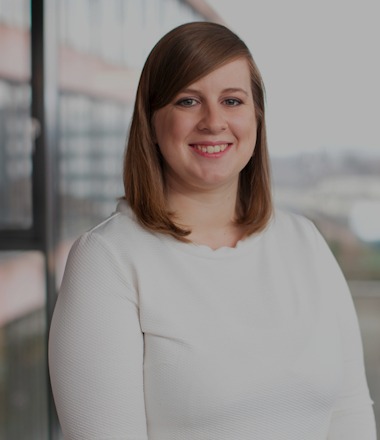
Jens Holbek
Managing Director in Copenhagen
Jens has spent more than two decades helping global organizations strengthen their procurement and supply chains. Today, as a Managing Director at Inverto, he shares why the field has become one of the most impactful places to build a career.
Most companies spend roughly half their revenue with external suppliers.
For Jens, this is why procurement and supply chain have always sat close to the center of business performance. The difference now is that leadership teams can no longer afford to treat them as operational functions sitting quietly in the background.
Because the stakes have changed.
COVID exposed how fragile global supply chains could become overnight. Energy prices surged. Geopolitical tensions reshaped sourcing strategies. AI accelerated transformation across entire industries. At the same time, businesses faced mounting pressure to stay competitive, resilient, and profitable all at once.
Suddenly, procurement and supply chain was no longer only about efficiency. It became a question of stability, growth and survival.
If companies cannot supply their customers, it can destroy the entire business, Now this is not only about profitability. It’s about whether a company can still compete.
That shift changed the conversation fundamentally. And for the people building careers inside the function, that shift matters just as much as it does for businesses themselves.
Because procurement consulting now sits at the intersection of commercial strategy, AI transformation, operational resilience and global uncertainty – exactly where many of the hardest business problems now live.
Procurement and Supply Chain is No Longer a Back-Office Function
Jens is quick to challenge outdated assumptions about the work itself.
The work we do within procurement and supply chain is fully management consulting. It’s not only buying paperclips.
Modern procurement consulting reaches deep into how businesses operate. Cost structures. Supplier relationships. Risk exposure. Product design. Resilience. Speed. Sustainability. Growth.
At Inverto, that work often starts with a simple business problem: a company needs to improve performance. But the complexity underneath is anything but simple.
Jens describes a recent example where rising oil prices pushed suppliers to increase costs. The challenge was not simply forcing prices back down.
We have to go in and help ensure these increased prices actually make sense. But the important part is the cooperation.
That cooperation can involve redesigning specifications, reducing complexity, finding alternative materials, changing service levels or identifying smarter ways for suppliers and clients to work together.
And that is exactly why procurement and supply chain has become a boardroom conversation. The problems sitting inside supply chains are no longer isolated operational issues. They shape profitability, competitiveness, and long-term business stability.
AI Is Creating More Space for the Work That Matters
Few industries have escaped the AI conversation, procurement consulting is no exception.
But Jens sees the opportunity less as replacement and more as refocusing.
AI helps us create efficiencies across parts of the analysis. That means we can spend more of our time on the complex challenges where our expertise creates the most value.
The result is less time buried in spreadsheets and more time solving problems with clients.
Instead of spending time behind an Excel sheet, we can spend the time consulting and strategizing and then executing and implementing.
The repetitive work shrinks, human work grows: relationship management, strategic thinking, cross-functional problem solving, implementation, change management. Those become more valuable in the age of AI.
Jens believes many companies are still early in that transition.
There is still a long way to go. It’s not only about getting the tools. It’s about adapting how companies actually work.
Which is another reason why procurement consulting is becoming more important: businesses need people who can help them navigate that change.
The Best Procurement and Supply Chain Consultants Rarely Look Like People Expect
Ask Jens what kind of people thrive in procurement and supply chain consulting, and he points to two things: deep expertise in the field and the ability to work effectively with people.
It’s people that like cracking difficult problems,” he says. “And people that like working together with others.
Procurement and supply chain consultants sit between commercial teams, operations, R&D, and leadership. They pull competing priorities into the same room and help organizations make better decisions together. “We help tie together the knots,” Jens says.
That means the strongest consultants are often the people who combine analytical strength with the ability to communicate clearly under pressure.
You need to be able to meet and have discussions with clients. It doesn’t matter if you are an introvert or extrovert but you need to be good with people.
Procurement also offers something Jens sees as a major advantage early in a consultant’s career: the opportunity to develop deep expertise in a specialist field.
When people join Inverto, they zoom in on a narrow field.
But according to Jens, that specialism still exposes consultants to a wide range of industries, business challenges and client environments. The result is a career path that combines depth with variety.
That depth accelerates development.
You become an expert very fast. And that means you can take on leadership roles quite soon.
It’s a winning combination for ambitious people. Specialism without narrowness. Depth without stagnation.
Why Consulting Gives you a Different Perspective
Jens also points to something that separates procurement and supply chain consulting from working client-side inside a single organization: exposure.
Consultants move across industries, business models and supply chains. They see how different companies solve similar problems. That creates pattern recognition.
You get insights from a lot of different industries.
That exposure allows consultants to bring ideas, approaches and ways of working from one industry into another, helping clients benefit from perspectives they might not otherwise encounter.
The advantage comes from transferring ideas across sectors.
You can take knowledge from other industries and lift the entire glass ceiling to a new level.
That breadth becomes increasingly valuable in a business environment where disruption rarely stays contained inside one sector for long.
The companies adapting fastest are often borrowing ideas from outside their own category, and consultants get to stand in the middle of that exchange.

The Career Question Sitting Above Every Other Career Question
Choosing the right firm matters. But for many experienced hires, there is a bigger question sitting alongside it:
- Is this market growing?
- Will this work still matter in ten years?
- Does this career move me close to the problems businesses actually care about?
That is the real question procurement and supply chain now answers differently than it did a decade ago. Because procurement today sits where commercial pressure, geopolitical uncertainty, sustainability demands and AI transformation collide. And according to Jens, demand for that expertise is only increasing.
“Inverto is one of the most rapidly rising companies,” he says. “There is definitely a need in the market for specialists within procurement and supply chain.”
For a long time, procurement and supply chain was underestimated because much of its best work happened quietly. Now the stakes are too high for it to stay invisible.
24th June 2026
Further Career Insights