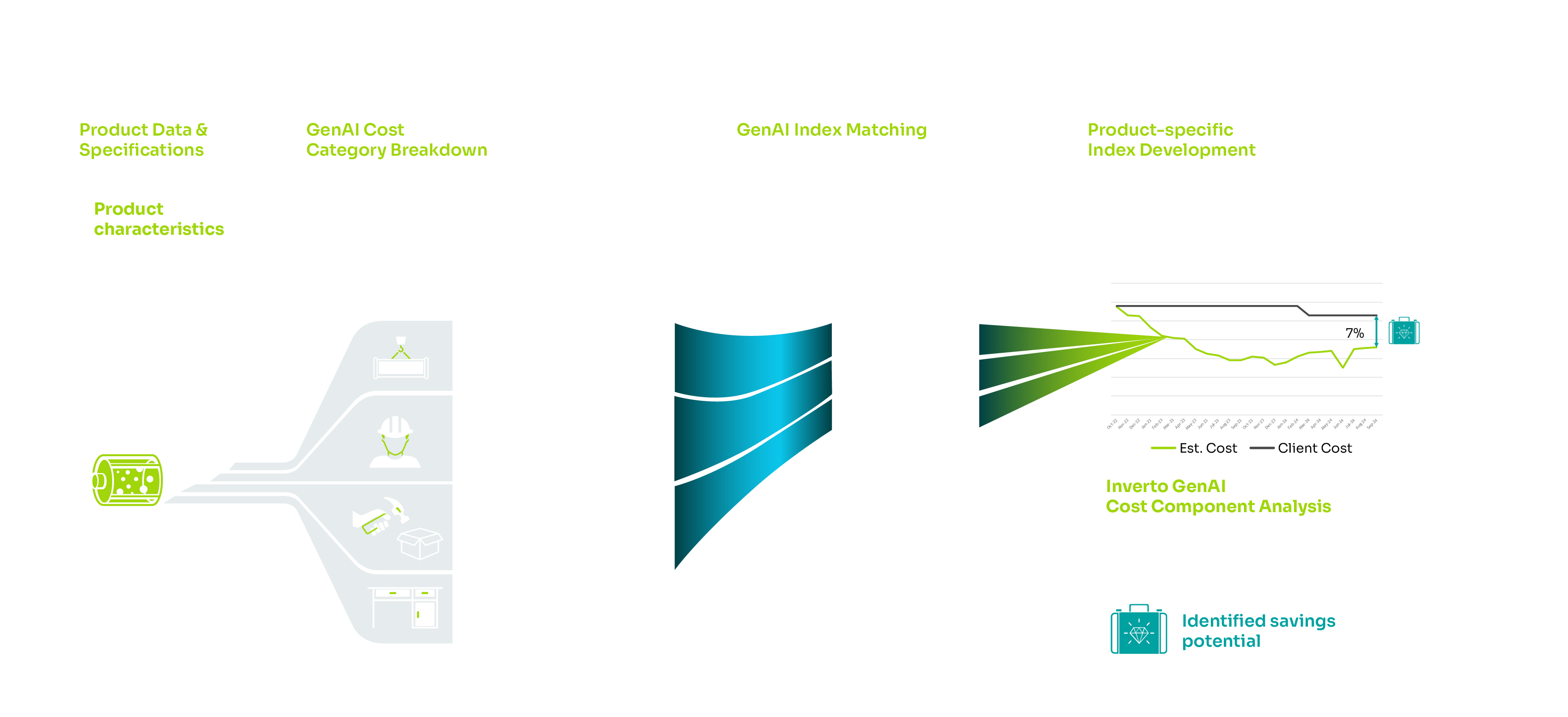
Since 2020, extreme price volatility has reshaped global procurement. Raw materials, energy, logistics, and labor costs have moved in sharp waves, but price adjustments have not followed symmetrically. Suppliers are quick to reference rising markets when justifying increases, yet declining indices rarely trigger equivalent reductions. Without transparency on how market movements translate into product-level costs, organizations often fail to detect structural cost gaps.
What used to be a discussion about isolated increases has become a debate about price development. And yet, many negotiations still fall into the same trap: suppliers selectively reference individual market indices and time windows that support their narrative. Capable buyers respond by reviewing broader index developments — but often lack transparency on how strongly a specific cost driver actually influences the product price, what a fair adjustment would look like, and how other cost components have evolved in parallel.
The result is an asymmetry of information: both sides bring data, but neither side shares a product-level view of total cost development. The conversation quickly turns into “story versus story” rather than a fact-based discussion about fair price evolution.
What’s missing is transparency at product level: a shared, fact-based understanding of how market movements actually translate into the cost of a specific article or SKU.
This is exactly the problem the Price Development Challenger (PDC) was designed to solve.
As one procurement leader from a global industrial manufacturer summarized it: “With extreme volatility, transparency becomes essential. If I can simulate fair price development at scale, I know where to focus my negotiations and where the real potential lies.”