Consumer companies are entering 2026 under sustained demand-side pressure. Consumers are spending more selectively, prioritizing value in everyday purchases while continuing to indulge in a limited number of categories that matter to them. Private labels continue to gain share across markets, and expectations around health, convenience, sustainability, and price transparency are rising. Together, these shifts reflect lasting changes in how consumers allocate spend, not temporary reactions to inflation.
At the same time, cost volatility, regulatory tightening, and fragile supply networks are eroding the effectiveness of traditional tools for margin protection. Price increases to the customer and incremental sourcing savings are increasingly difficult to sustain in a value-sensitive and highly competitive environment.
In this context, procurement has become a decisive business lever. Sitting at the intersection of consumer demand, supplier ecosystems, and cost structures, it increasingly determines how effectively companies protect margins, adapt portfolios, and safeguard brand trust. This article outlines the imperatives shaping how leading consumer companies will use procurement as a competitive advantage in 2026.
CROSS-CONSUMER OVERVIEW
A Shared Shift in the Procurement Agenda

Across consumer industries, these pressures are converging. What differentiates leaders is no longer scale or buying power alone.
It is the ability to respond faster and more structurally to change by redesigning portfolios, supply networks, and decision making ahead of disruption.
Three dynamics define the agenda heading into 2026:
- Value pressure meets market power: Retailers and platforms are no longer just negotiating harder, they increasingly set commercial baselines on pricing, margins, and assortments, structurally limiting manufacturers’ pricing power.
- Consumption shifts outpace sourcing models: Health, convenience, and experience-driven demand are now changing within product lifecycles, evolving faster than traditional products and supplier cycles and favoring companies that can redesign portfolios and supplier models at speed.
These dynamics play out differently across consumer sectors.
- Speed and resilience become decisive: Volatility and regulation no longer test preparedness episodically but continuously exposing slow decision-making and separating organizations that can adjust sourcing, availability, and portfolios in real time from those that cannot.
CONSUMER GOODS
Absorbing Cost Volatility While Redesigning Portfolios
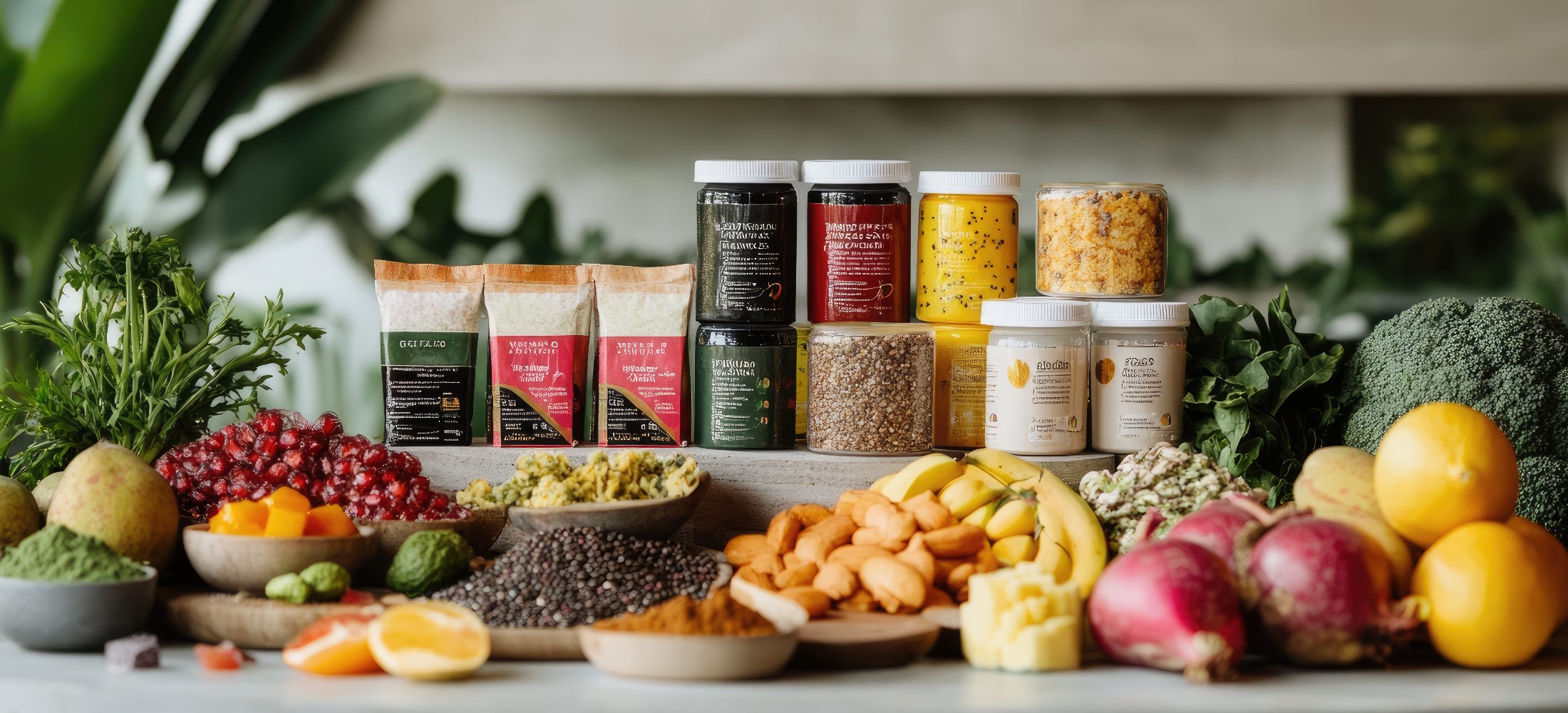
Consumer goods manufacturers are facing unprecedented upstream pressure, as volatile input costs and tightening regulations force structural changes to portfolios, recipes, and supplier networks.
Cost volatility and regulation push resilience onto the board agenda
Input-cost volatility remains structurally elevated. For example, following the historic price spikes of 2024, cocoa markets have stayed highly unstable into late 2025, with futures trading around $6,000 per metric ton and continuing to swing sharply month to month. Coffee prices have shown similar instability. These movements go well beyond normal year on year fluctuations. They disrupt cost planning and force defensive measures such as shrinkflation, accelerated reformulation, or margin sacrifice.
Regulatory pressure is intensifying in parallel. Requirements such as EUDR, PPWR, CSRD, and CBAM are turning supplier transparency and traceability into non-negotiable capabilities. Increasingly, non-compliance translates directly into lost revenue, delisting, or delayed market access rather than regulatory fines alone.
In response, procurement leaders must focus on what can be controlled: diversified sourcing strategies, regional supplier ecosystems, and transparent, compliant supply chains. Scenario modeling and risk analytics need to be embedded to manage trade-offs between cost, service, and risk. Volatility is no longer episodic; it is structural.
To protect margins structurally, procurement must move upstream working with R&D, marketing, and operations to simplify formulations, rethink packaging, adjust pack sizes, and redesign supplier footprints while protecting quality.
For branded consumer goods manufacturers, this upstream redesign must be anchored in brand protection. Procurement actions on formulations, ingredients, packaging, and suppliers need to preserve taste, quality, and consistency at scale, so that cost and resilience measures reinforce rather than erode consumer trust in the brand.
GLP-1 and Health Trends Challenge Traditional Product Portfolios
Health and wellness trends are reshaping entire consumer categories. Demand for low-sugar, functional products, and protein-rich products continues to rise, while appetite-suppressing weight-loss medications are beginning to alter consumption volumes across multiple segments.
A major emerging factor is the surge in GLP-1 weight-loss medication use, which has seen a 700% increase among non-diabetic US patients. Early signals point to reduced consumption of calorie-dense, low-satiety products and declining volumes in traditional snack and impulse categories. Critically, these shifts are happening faster than traditional product development and sourcing cycles can adapt.
Procurement therefore needs to play a pivotal role. Ingredient portfolios must become more flexible, supplier innovation cycles shorter, and reformulation capabilities stronger. Organizations that fail to build this flexibility will struggle to respond at the speed demand now shifts.
As pressure moves downstream, retailers increasingly sit at the center of margin and value decisions.
RETAIL
Managing Margin Pressure and Volatility as Retailers Set the Terms

Retailers are operating at the center of value pressure, using private label and assortment control to actively reset margin economics across the value chain.
Private Label and Value Imperative Reset Margin Economics
Consumers remain highly price conscious. In Europe, private label now represents around 38–40% of total grocery sales value¹, with several markets exceeding 40% share² making own-brand goods a structural force in retail bargaining dynamics. Retailers are using this leverage to resist price increases and push for structural margin resets.
For procurement, this marks a clear break from the past. Margin resilience can no longer rely on pass-through pricing or periodic negotiations. Retail procurement teams need to embed design-to-value, cost transparency, and systematic supplier challenges into category strategies to protect margins. This tension manifests differently in fashion and luxury.
FASHION & LUXURY
Accelerating Decisions While Protecting Brand Integrity

Fashion and luxury companies enter 2026 facing continued pressure on demand and margins, alongside high uncertainty across sourcing regions and markets. Cost discipline has become critical, even for premium brands, while expectations around quality, brand integrity, and sustainability remain non-negotiable.
AI turns procurement from execution engine into decision advantage
In this context, AI creates value by enabling faster, better-connected decisions across compressed collection planning and development calendars. It links demand signals with material costs, supplier performance, and time to market, helping brands regain control in an increasingly volatile environment.
To capture this value, procurement leaders must use AI selectively to reduce external supplier dependency, bring more decision making in-house, and increase efficiency across sourcing and negotiation processes. Rather than automating decisions, AI should be used to reduce complexity and focus senior judgment on balancing speed, cost, and brand impact.
What Will Differentiate Fashion & Luxury in 2026
For fashion and luxury leaders, differentiation will no longer come from access to technology, but from the disciplined ability to use insights deliberately amid geopolitical uncertainty, including trade tensions, regional production risks in Eastern Europe, and shifting global trade dynamics. Sustainability remains a critical expectation in fashion and luxury, but in 2026 it increasingly needs to be balanced against cost discipline, supply resilience, and operational flexibility.
TRAVEL & TOURISM
Assuring Service Continuity While Protecting Experience and Trust

Travel and tourism companies operate in an environment where service failures are immediately visible to customers and amplified through digital platforms. As operations become more fragmented and peak volatility increases, a single supplier disruption can cascade into widespread experience breakdowns and reputational damage.
From savings to service differentiator: procurement as a growth and trust lever
In this context, procurement can no longer focus primarily on cost optimization alone. It must actively assure service continuity across complex partner ecosystems by securing capacity, reliability, and recovery speed during peaks and disruptions.
This requires close alignment with operations, finance, and commercial teams. Supplier performance in areas such as availability, on-time delivery, and service recovery is becoming a source of competitive differentiation rather than a hygiene factor. At the same time, responsible sourcing, sustainability standards, and transparent partnerships increasingly shape traveler choice, platform rankings, and long-term brand trust.

What this means for the C-suite
In consumer industries, procurement has become one of the few functions where consumer behavior, financial performance, and operational resilience converge. As volatility becomes the norm, leadership teams that treat procurement as a strategic partner will be able to absorb shocks, adapt portfolios at speed, and protect trust, while others will struggle to keep pace.
Sources:
¹ Private Label Trends Europe 2025
² NielsenIQ: Consumer Outlook: Guide to 2026
Get in Contact with our Experts

Marcus Schwarz
Marcus Schwarz
Managing Director

Katharina Erfort
Katharina Erfort
Principal

Daniela Klotz
Daniela Klotz
Managing Director

Nicolas Bühler
Nicolas Bühler
Principal